
What happens to the water after you rinse off?
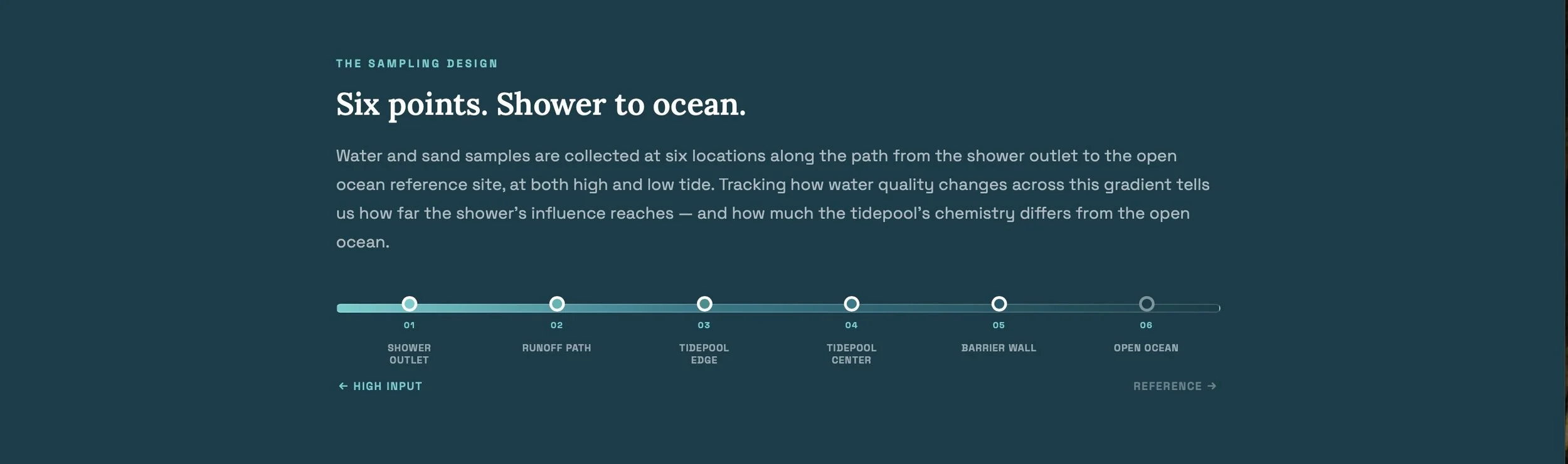
In collaboration with Mālama Pūpūkea-Waimea, a UH Mānoa research team is studying how the public beach shower affects water quality in the Kapoʻo tidepool just downhill, and whether native plants can help.
A small shower, a sensitive ecosystem
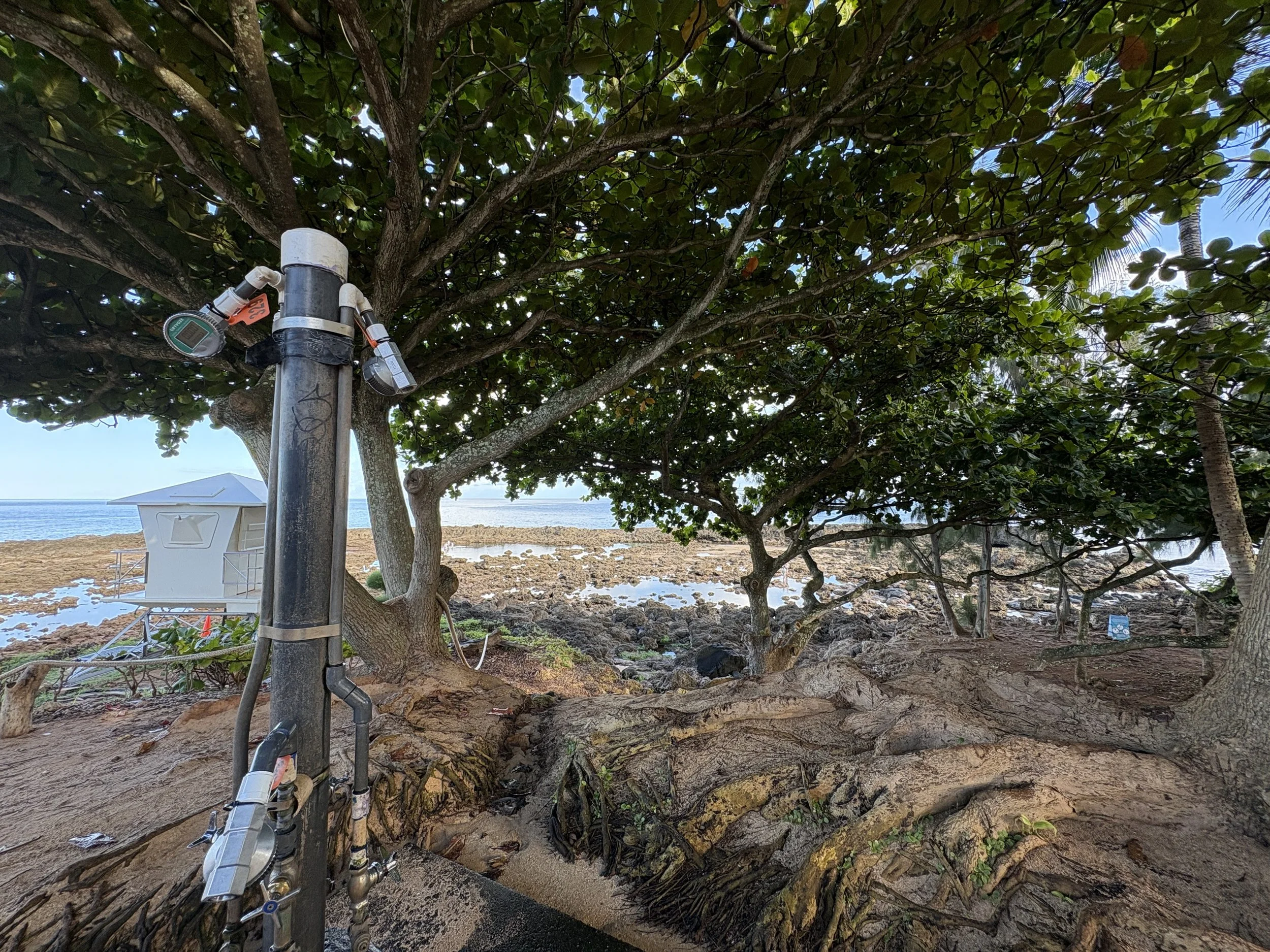
Kapoʻo is a semi-enclosed tidepool within a designated Marine Life Conservation District (MLCD). Because of its shape and limited connection to the open ocean, water that enters the pool stays for a long time, especially in summer. That makes it uniquely sensitive to what flows in from the surrounding land.
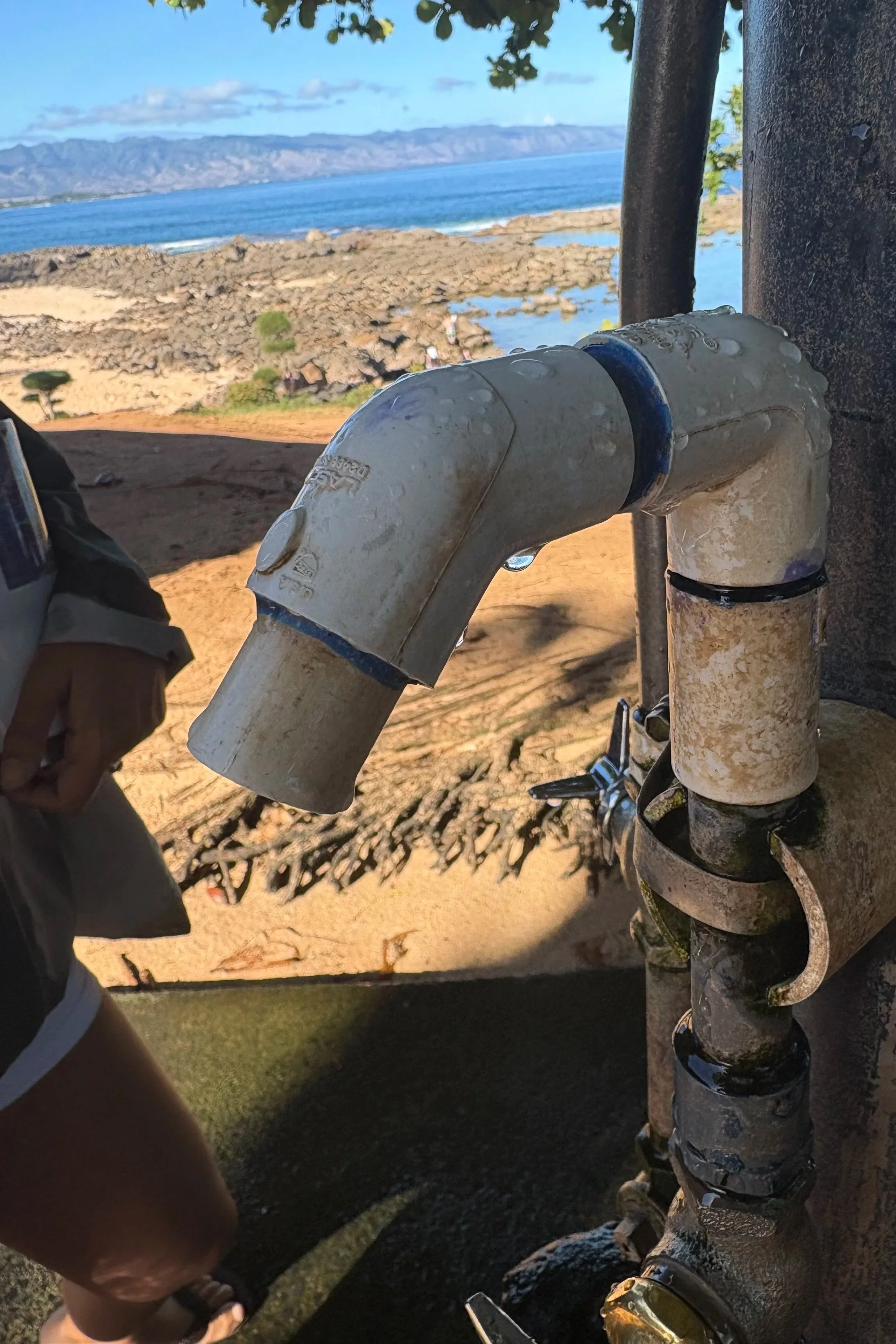
Every time someone uses the beach shower, freshwater carries soap residue, sunscreen, and nutrients across the sand toward the tidepool. We don’t yet know how much this matters. That’s what we’re here to find out.
The Natural Experiment
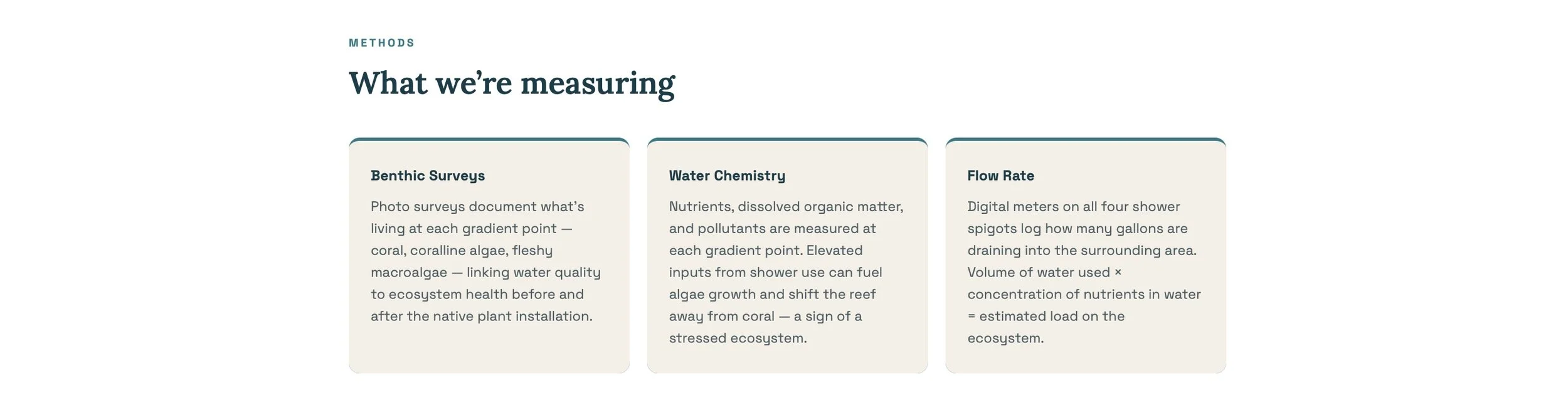
Native Āeʻae (Bacopa monnieri) — a coastal wetland plant native to Hawaiʻi, will be planted along the shower runoff corridor once baseline data collection is complete. Āeʻae is known to filter stormwater and may take up certain contaminants into its root structure before they reach the sea. By documenting conditions before and after planting, we can measure whether the intervention actually changes what reaches the ocean.
Before and after native plant installation
Citizen Science - You can be a part of this!
No science background needed. If you’re reading this, your observations are genuinely useful. It takes less than 5 minutes.
