Dye Tracer Study
The Kapo'o Tidepool ecosystem is a special place in the Pūpūkea Marine Life Conservation District, and it’s also a place where people, groundwater, and the ocean meet.
Mālama Pūpūkea-Waimea (MPW) and WAI are collaborating on a study to investigate potential leakage from the Pūpūkea Beach Park restroom wastewater system into the marine environment.
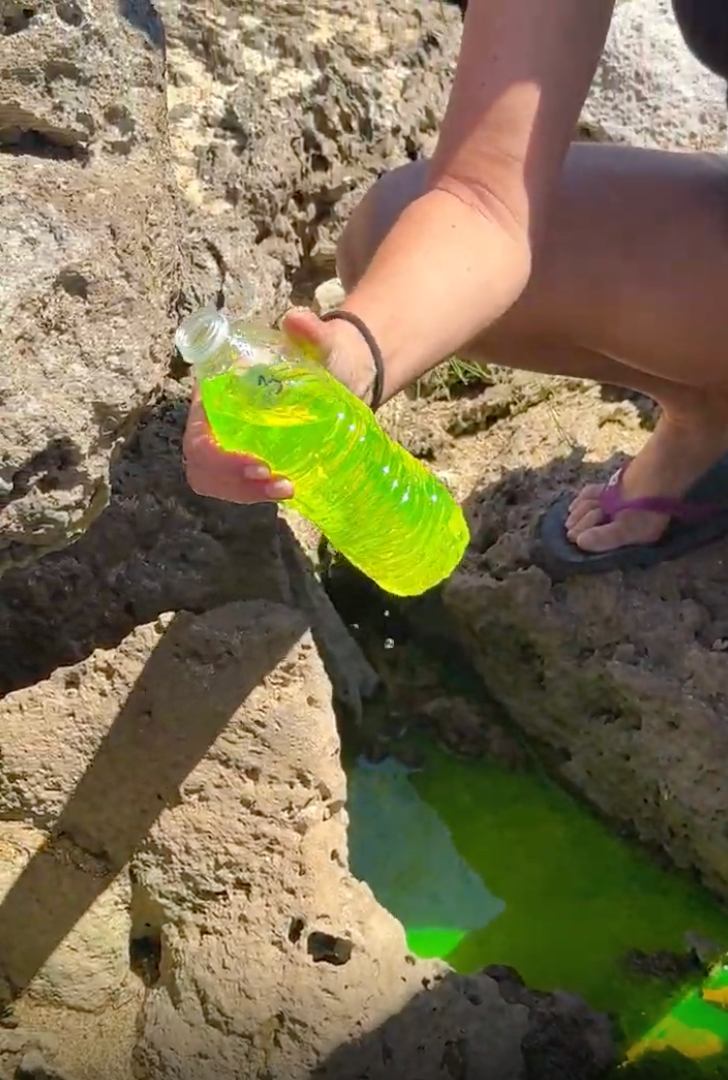
Scientists are using a harmless green dye tracer to help track water movement and better understand whether wastewater may be reaching the Kapo'o Tidepools
Why does this matter?
Wastewater systems can introduce excess nutrients, harmful pathogens, and other contaminants into coastal waters. These impacts
The dye used in this study is safe for marine life and humans and will dissipate. The project is being conducted with approval from the State of Hawai’i and Honolulu City Department of Parks and Recreation.
If youʻre visiting Kapo'o this September, you may see scientists and community partners working onsite, or you may even notice traces of the green dye as part of the study.
Weʻll be sure to post updates as we go!
Mahalo to our partners at WAI and the agencies supporting this research.
Prior research on sewage contamination at Kapo'o:
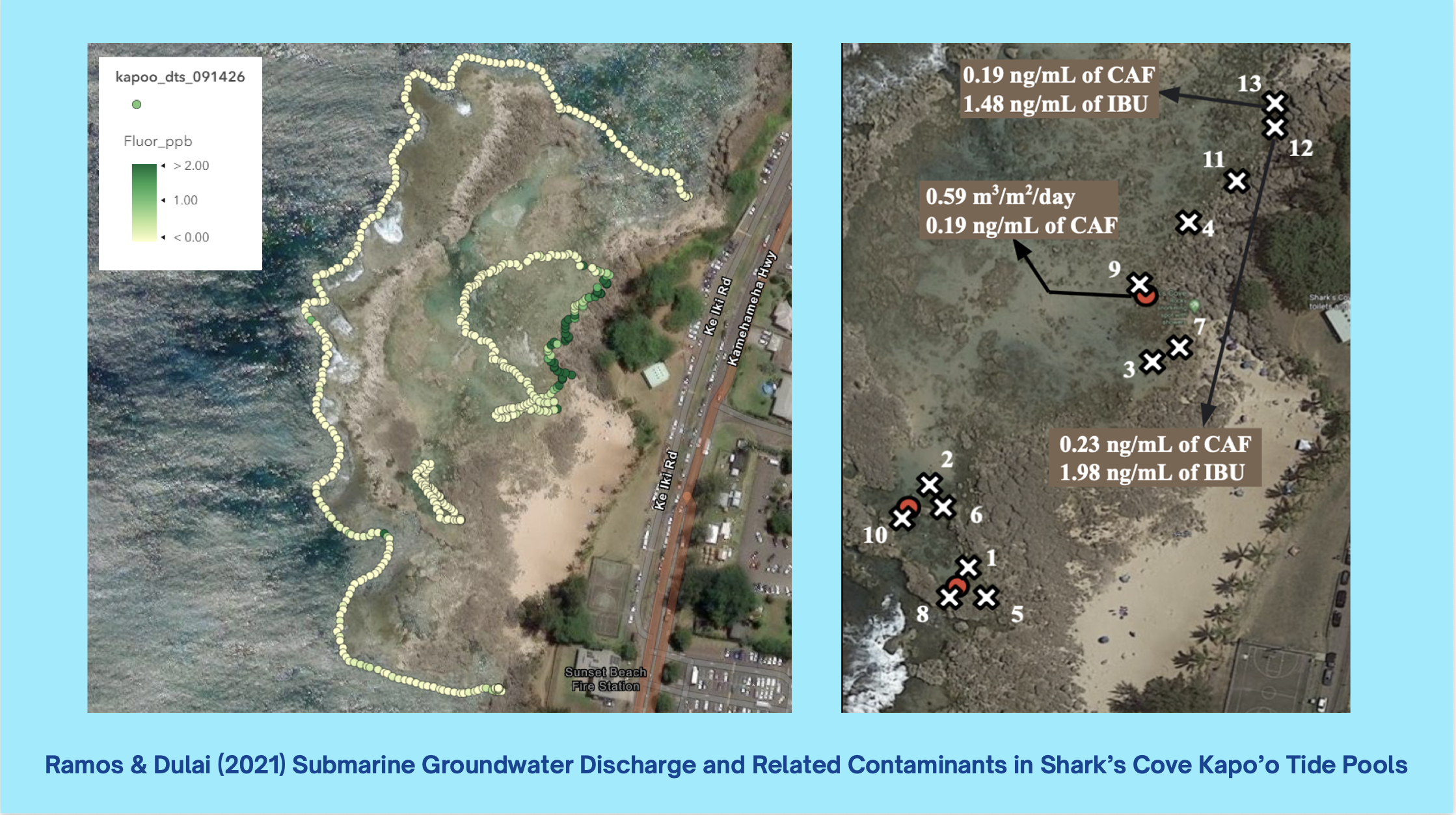
A 2021 study for MPW by Dr. Henritta Dulai and graduate student Aston Ramos found "tracers" of chemicals unique to human sewage -- like Ibuprofen and caffeine -- in the Tidepools in the same area where MPW-WAI are now detecting the green dye. This prior study helps MPW and WAI confirm the pathways of leakage from the septic system into the marine environment.
Media Coverage
Dye study raises questions about wastewater reaching Shark’s Cove tide pools
by: Nikki Schenfeld, KHON2
Posted: Sep 17, 2026
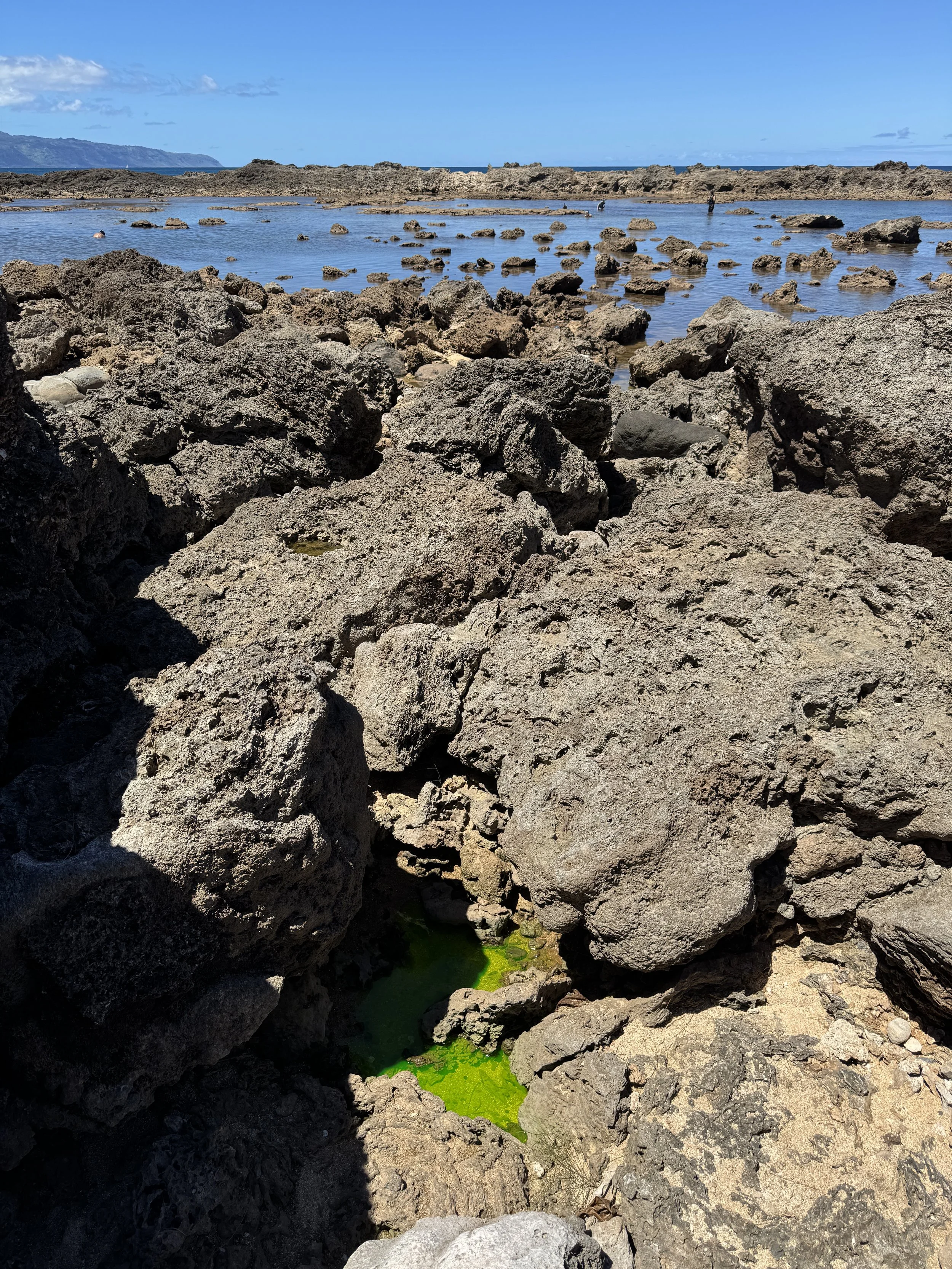
Green Dye confirms wastewater connection between beach park restrooms and Sharks Cove
by: Kimber Collins, KITV
Posted: Sep 18, 2026